
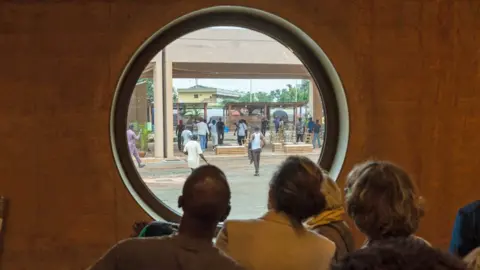
Nigeria's remarkable new Art Museum of West Africa (Mowaa) has found itself in the middle of regional political struggles during the week it was scheduled to – but was unable – to welcome visitors to the visitors for the very first time.
The Grand Vision
The large-scale campus stands in the heart of Benin City, capital of the southern region of Edo – and includes an archaeological dig and facilities designed by high-profile British-Ghanaian architect Sir David Adjaye, particularly noted for the National Museum of African American History and Culture that was inaugurated in Washington DC in 2016.
It has been 60 months in the making – and is designed to showcase both the heritage and the current era of creativity in the region known for the cultural artifacts, artworks stolen from the king's palace by British soldiers in the 19th Century.
Preparation and Promise
It is remarkable – and ahead of the anticipated opening, Mowaa was energetic with employees resolved to demonstrate it is a venue that can rival renowned cultural centers in the Europe and America.
Inside art restorers precisely unwrapped art pieces from secure wrapping, inspecting each piece and taking thorough documentation before positioning them on display surfaces and bases.
Technicians adjusted temperature regulation systems. In the materials science laboratory, staff members calibrated instruments designed to preserve ancient items.
Investment and Economic Plans
The initiative has been the idea of entrepreneur Phillip Ihenacho – presently Mowaa's managing director.
"I hope us to have a significant economic impact on area populations in this region," he explained to media outlets, adding that he hoped to make Benin City "a tourism center."
Mowaa, a charitable Nigerian institution, aims at generating in excess of 30,000 employment opportunities and contributing more than $80m per year to the local cultural industry through alliances and programming.
Financial Support and Government Issues
It has required $25m to achieve this stage – funds gathered from multiple contributors, including the international partners, the British Museum and the regional authorities.
But at present the state authorities has revoked permission from beneath it – terminating the use of the site on which the facility was constructed.
An Edo state spokesperson clarified this was because in the initial documents it had called itself the Edo-named institution – and it had later eliminated "the regional name" from its title.
Unrest and Official Response
This announcement followed demonstrations on Sunday, when people invaded the facility calling for it be called the Royal Benin Museum.
A disruptive assembly confronted foreign guests at the museum before the inauguration – requiring them to be escorted out under police escort.
National leader Bola Tinubu has also become involved to work to address the conflict, establishing a presidential committee to do some damage control.
Administrative Challenges
But how has this become so politicised – and such a reputation problem?
Much of it results from local power struggles at a regional government level, as it was the ex-administrator Godwin Obaseki – whose term in office ended last year – who was a major backer of the museum.
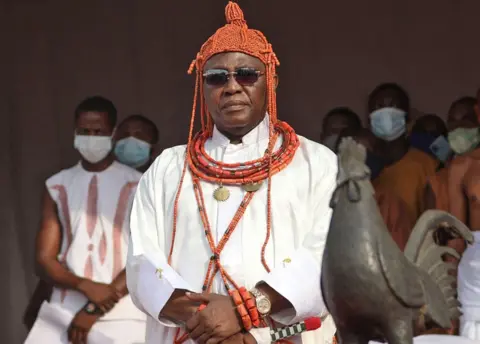
And it seems the leadership of the new governor, a strong supporter of the area king, called the royal figure, may want increased control in the initiative. The protesters on Sunday, for instance, were demanding that the facility be placed under the control of Oba Ewuare II.
The Benin Bronzes Controversy
This brings into focus the contentious issue of the Benin Bronzes, one of the continent's most celebrated cultural treasures.
Because even if the institution does eventually open, these bronzes will be clearly not present.
They are metal, ivory and wooden sculptures that once adorned the monarch's home of the historical empire before colonial troops stole them in the late nineteenth century during a colonial invasion.
Currently, thousands continue to be spread across galleries in Europe and North America -- featuring the UK institution, Berlin's Humboldt Forum and the American museum.
Restitution Efforts
Their homecoming has become one of the most debated conversations in the international art community. Roughly 150 have currently been returned – and more are due to follow.
When ideas for the institution in the urban center were originally proposed in the pre-pandemic era, the influential figures on Nigeria's art scene expected it would become their perfect venue – a modern campus to display them to the international community.
But the issues became confused recently after the central administration stated that the traditional ruler would be the rightful owner of returned objects – and the palace campaigned for a institution under the king's authority, opposing the preferences of Obaseki.
Strategic Positioning
This placed Mowaa in a difficult situation: expressing a clear stance on restitution while being careful on ownership – and emphasising its wider mission, which led to|c


